A Speck In Time
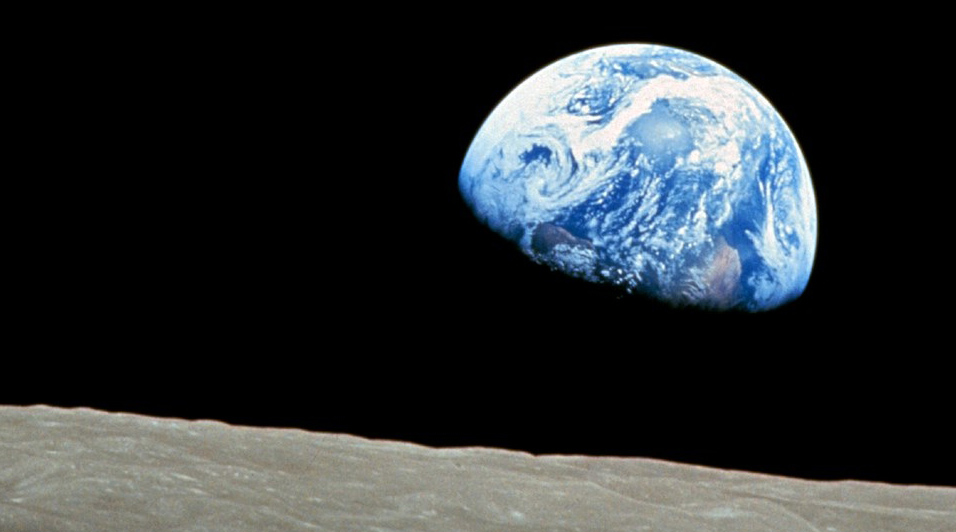
A Speck In Time is the culmination of a 42-year-old vision, even more relevant now than when it was written, inspired by the reality that we are all crew on the same unlikely space ship, Earth, existing within an otherwise deserted corner of an unimaginably vast universe.
A Speck In Time was written as a unique, multi-genre, world symphony by Brian Keane in 1984, as a tribute to the miracle of our existance. It was recorded around the world in 2025 and mixed in 2026. A Speck In Time is a 32 minute symphony written in 6 movements.
Movement 1 begins with distant otherworldly voices fading up, out of which appears a 7/8 astinato figure played by harp, piano, marimba and synthesizer. This 7/8 figure becomes the driving energy force. and a common denominator, connecting multi-cultural polyrhythms, with world percussion, woodwinds, strings, acoustic guitar, and distant primitive voices, developing into a rhythmic theme of sorts that is developed throughout the symphony.
The main melodic theme is simple and memorable, introduced on a classical guitar approximately 2:40 into the piece, before breaking into a salsa with horns and percussion, and echoing the theme again in brass over a wall of electric guitars with exuberant violin section answers. Breaking back into a salsa feel, a second theme is introduced over the salsa feel, in a sort of Celtic reel, played on violins, Irish Whistle, and pipes, before going back to the rhythmic development idea, and stating the main melody again in brass, and in a transposed key on guitar. The first movement ends with hits that hand off to the second movement.
Movement 2 is energetic, beginning with woodwinds picking up the Celtic reel, conventionally at first, quickly unraveling harmonically into dissonance and odd meter complication as the rest of the orchestra joins in with constantly surprising interplay on the harmonically and rhythmically fractured themes. This leads to an angular piano solo over electric guitars played by American Ballet Theater principle pianist Emily Wong, and handing off to Chinese erhu, played by George Gao, Ney, played by Omar Faruk Tekbilek, and pipes played by Ivan Goff, with Keane’s electric slide guitar appearing in and out. The Celtic reel melody is stated in the woodwinds one more time before the whole orchestra hits an insistent, excited rhythmic figure as drummer Rodney Holmes takes a very energetic solo, showing off his amazing talent, with all stopping on a sudden hit, out of which emerges Jo-Ann Sternberg’s clarinet cadenza, winding down the energy meditatively over an ethnic Indian drone.
Movement 3 is the adagio section of the symphony, beginning with Robert Ingliss’s oboe inversion of the main theme with other woodwinds and gently undulating strings, it moves into an almost Pink Floyd - like psychedelic and surreal section with rock guitars and slide guitar, organ, bass and drums, winding down with woodwinds and acoustic guitar and broadening out again as well with orchestra, slide guitar, and Marshall Coid’s soaring violin solo, before winding down with Bart Feller’s flute and acoustic guitar to the string adagio section. The string adagio develops the Celtic melody slowly with a deeply passionate Dan Barrett cello solo building up to moments of stunning emotional beauty, and winding down dynamically to an intimate section of the main melody with Joanie Madden’s Irish whistle, and Robert Zubrycki’s fiddle. Afer that, the piece develops into one more intense and dissonant area with brass and slide guitar before releasing with an emotional climax of awe inspiring beauty with the whistle and strings soaring over the orchestra, ending in a unison resolve together.
Movement 4 is the shortest movementt, uptempo, and almost comic, starting with an odd woodwind conversion between solo oboe, english horn, and Gina Cuffari’s bassoon, and develops into a fantasy - like dissonant, and inventive cartoon music section with odd woodwind, string, and brass lines and comical percussion. The playful quality of this section is also incredibly complex, and yet seems not to take itself too seriously, almost lampooning the idea of being egotistical. This hands to a 5/8 electric guitar, drums, and orchestra section that is more joyful, ending on a final crash, out of which emerges the original 7/8 energy figure and movement 5 begins.
Movement 5 is joyful and uplifting realization of the various elements of the symphony, starting off on the same beat that movement 4 ends, with a salsa jam over the 7/8 energy source figure. Composer/ guitarist Brian Keane improvises on acoustic guitar over percussion, salsa bass, piano, and primitive and joyful tribal voices. That salsa foundation continues for a Chinese Erhu solo, a Middle Eastern ney solo, and a return of the Celtic reel played by the violin section, Irish whistle, and pipes, with organ providing a counter rhythm, and horn section. The piece lifts off from there as electric guitars, and more orchestra joins in a build that is both dissonant, complicated rhythmically, and joyfully full of surprises, ending with a dissonant screaming electric guitar solo.
The next section is where a prolonged joyful and uplifting peak begins, with all three themes playing simultaneously in majestic and triumphant counterpoint with each other, as if to underscore the idea that everyone is living in the same wonderful opportunity for life, in the same world together. The peak lingers in joyful celebration with complicated rhythmic transitions, involving the orchestra, progressive rock band, ethnic voices, percussion, twisting and turning in ever surprising and joyful ways until it reaches a spiritual pinnacle with one last statement of the melody with soaring strings and slide guitar, which resolves to what seems like a glorious ending, except the 7/8 energy force emerges and continues into Movement 6.
Movement 6 is the final movement of A Speck In Time, which has the underlying 7/8 energy figure, with piano answers, acoustic guitar and light percussion, but the orchestra plays long, lush, and beautiful chords that seem to float over the time with electric guitar slides in suspended contemplation of beauty and gratitude, with an occasionally playful interchange as if to acknowledge a new generation, the peace becomes deeply meditative and spiritual before lifting off into the distant space void from which it came at the beginning of the symphony, then fading to oblivion.
Music Credits:
Produced by Brian Keane
Brian Keane - classical guitar, acoustic steel string guitar, electric guitars, electric slide guitar, bouzouki, charango, yanquin, electric piano, celeste, concertina, marimba, percussion, synthesizers, electronic sound design
Rhythm Section
Dave Anderson electric bass, salsa bass
Amy Berger - harp
Rodney Holmes - drums, drum solo
Joey Melotti - organ
Emily Wong - acoustic piano
World Musicians
Ara Dinkjian - oud
George Gao - erhu
Ivan Goff - pipes
Joanie Madden - Irish whistle, Celtic flute
Jerry Mall - congas
Emedin Rivera - percussion
Omar Faruk Tekbilek - ney, bendir, darbuka, baglama
Arto Tuncboyaciyan - percussion, tribal drums
Orchestral Musicians
Woodwinds
Gina Cuffari - bassoons
Chris Cullen - bass clarinet
Bart Feller - flutes, piccolo
Robert Ingliss - oboe, english horn
Jo-Ann Sternberg - clarinets
Brass
Mike Boschen - tenor and bass trombones
Eric C. Davis - french horns
Tony Kadleck - trumpets, piccolo trumpet
Christopher Komer - french horns
Strings
Soloists
Dan Barrett - cello
Marshall Coid - violin
Robert Zubrycki - fiddle
Violins
Kobi Malkin - spiccato, section
Elizabeth Nielson - spiccato, section
Suliman Tekalli - spiccato, section
Nikita Yermak - spiccato, section
Jorge Avila - section
Roxanne Bergman - section
Kurt Coble - sectin
Marshall Coid - section
Shan Jiang - section
Violas
Ralph Farris - spiccato, section
Kal Sugatski - spiccato, section
Nikita Yermak - spiccato, section
Judith Ablon - section
Jill Jaffe - sectin
Tanner Menees - section
Katie Von Braun - section
Cellos
Dan Barrett -spiccato, section
Kate Dillingham - spiccato, section
Ani Kalayjian - spiccato, section
Kirsten Jermè - section
Basses
Greg Chudzik - spiccato, section
Leo Huppert - spiccato, section
Jay Elfenbein - section
Percussion
Daniel Haskins - timpani
Thierry Arpino - orchestral percussion
Arti Dixson - orchestral percussion
Recorded January - September 2025 at:
Brian Keane Music Inc. Studios, Monroe, CT
Jeff Frez-Abrecht - principal engineer, digital coordinator
Jamie Bahr - engineer
Carriage House Recording Studio, Stamford, CT.
Sean Donaher - engineer
Jeff Frez-Albrecht - engineer
Johnny Montagnese - engineer
Ian Callahan - engineer
Cyber Folk Studio, Yerevan, Armenia
Davit Sukiasyan - engineer
Dreamspell Studios, Henderson, NV.
Joey Melotti - engineer
Electric Wildlife Studio, Lehigh Valley, PA.
Rodney Holmes - engineer
Flying Squirrel Studio, New Fairfield, CT
Dave Anderson - engineer
Location recordings:
Beijing China by George Gao
Deerfield Beach, FL. by Jerry Mall
Istanbul, Turkey by Onur Diner
Indigenous voices recorded at various locations on
India, Africa, South America, and Asia
Mixed at Brian Keane Music, Inc, Monroe, CT by:
Brian Keane, Jeffrey Lesser, Jeff Frez-Albrecht
A Speck In Time
Composed by Brian Alexander Keane ASCAP
Published by Brian Keane Music Inc. ASCAP
Copyright 1984
Arranged and orchestrated by Brian Keane
Frank Perri - copyist
Bill Holloman Jr. - additional copyist
Bonnie Erickson - Studio Coordinator
Music Production Consultants
Amy Berger, Chris Cullen, Robert Ingliss, Jeff Jones, Tony Kadleck, Phil Magnotti, Johnny Montagnese, Warren Stein, Jo-Ann Sternberg, Don Wallace, Emily Wong, Nikita Yermak
“We are all connected to each other in ways that we may not fully comprehend, and the proof of that connection is music.”
- Brian Keane
A Speck In Time Story
In 1984 at the age of 31, two years after scoring the music to his first of what would become many Oscar nominated documentaries, Brian Keane, was still primarily making his living as a guitarist, having just finished a European guitar trio tour with jazz/fusion pioneer Larry Coryell and flamenco great Paco de Lucia, when he conceived of writing a piece of music where musicians from different cultures around the world could play the same music at the same time, in celebration of their mutual existence on the same planet, in the same “speck in time.”
Writing a figure in 7/8 time which cycled against other time signatures, Brian was able to weave simple, memorable themes, with complex developmental and rhythmic ideas to create a unique composition that was both accessible and intelligent, and could accommodate multiculturalism in a symphonic form simultaneously with fusions of other types of musical genres as well. He called the piece A Speck in Time. Sean Harkness, (Brian’s former guitar student and, later, a Windham Hill recording artist), played the 7/8 figure as Brian experimented and wrote down notes on music paper in the beginning in the fall of 1984.
Later in 1985, Keane purchased early computer software for composing music, and put his ideas down using the synthesizers of the era, into a not so portable IBM portable computer, and stored the compositional ideas on 56K floppy disks. At that time, Brian’s idea was impossibly ambitious and too costly for practicality.
A Speck in Time sat on floppy disks for 33 years while Keane developed his award-winning career as a pioneering composer in developing music for documentary film, scoring dozens of Emmy award-winning classics (from the chimps movie that made naturalist Jane Goodall well known, to the Ric Burns’ New York A Documentary Film, seen by over 60 million people, to developing entertainment industry influential music for the first prime time contemporary documentary series on television, ABC Turning Point, to scoring Emmy winning sports classics like Do You Believe in Miracles?). Also during this time he composed for feature films, and became a Grammy-winning world music producer with 37 Billboard Top Ten charting albums in their various categories throughout the 1990s and early 2000s.
As Keane’s reputation as a composer grew, he started composing more and more for orchestras, including commissions for the London Symphony Orchestra, Irish Film Orchestra, Istanbul Symphony, the 75th Anniversary of American Ballet Theatre, and many others. Keane developed his prolific catalog of over 500 film scores and built a computerized database that categorized his music, and leased the music library to major entertainment companies. Keane would use that revenue stream to fund the development of altruistic music projects, without regard to short term commercial trends from that point on.
In 2017, Brian revived A Speck in Time electronically with his long-time house engineer, Jeff Frez-Albrecht, who transferred the data from the floppy disks it had been stored on for 33 years onto the modern software and synths that Keane was using for sketching orchestration and scoring music commercially. Brian adapted the piece to its current modern orchestration, and was surprised to find that he didn’t have to change any of the original composition from the 1984 midi files. The entire symphony had come to him intact, and was still relevant 33 years later, if not more relevant than ever.
After the music industry was forced to adapt to the Covid-19 pandemic in 2020, digital recording from anywhere in the world became commonplace. and that made it finally possible to realize a live recording of A Speck in Time. Brian decided to go ahead and record the symphony and make a film that went along with it.
In 2025, the entire year was set aside to record A Speck in Time and two other symphonies. Brian assembled an orchestra of top musicians of multiple genres and disciplines (world musicians, classical musicians, and top session players from around the world), including many of the great musicians who had recorded on Keane's films and records over his 50-year award-winning career.
Due to the complexity and technological challenges of the project, a team of veteran engineers joined Brian in recording, assembling and mixing thousands of tracks recorded all over the world.
Brian Keane has long believed that music is a universal language, and proof of a planetary connection between all living things.
A Speck In Time is the musical evidence that our connection exists in a much larger context that most of us ever think about.

 Button Below To Listen To A Track